

Recipe variations for every constitution type
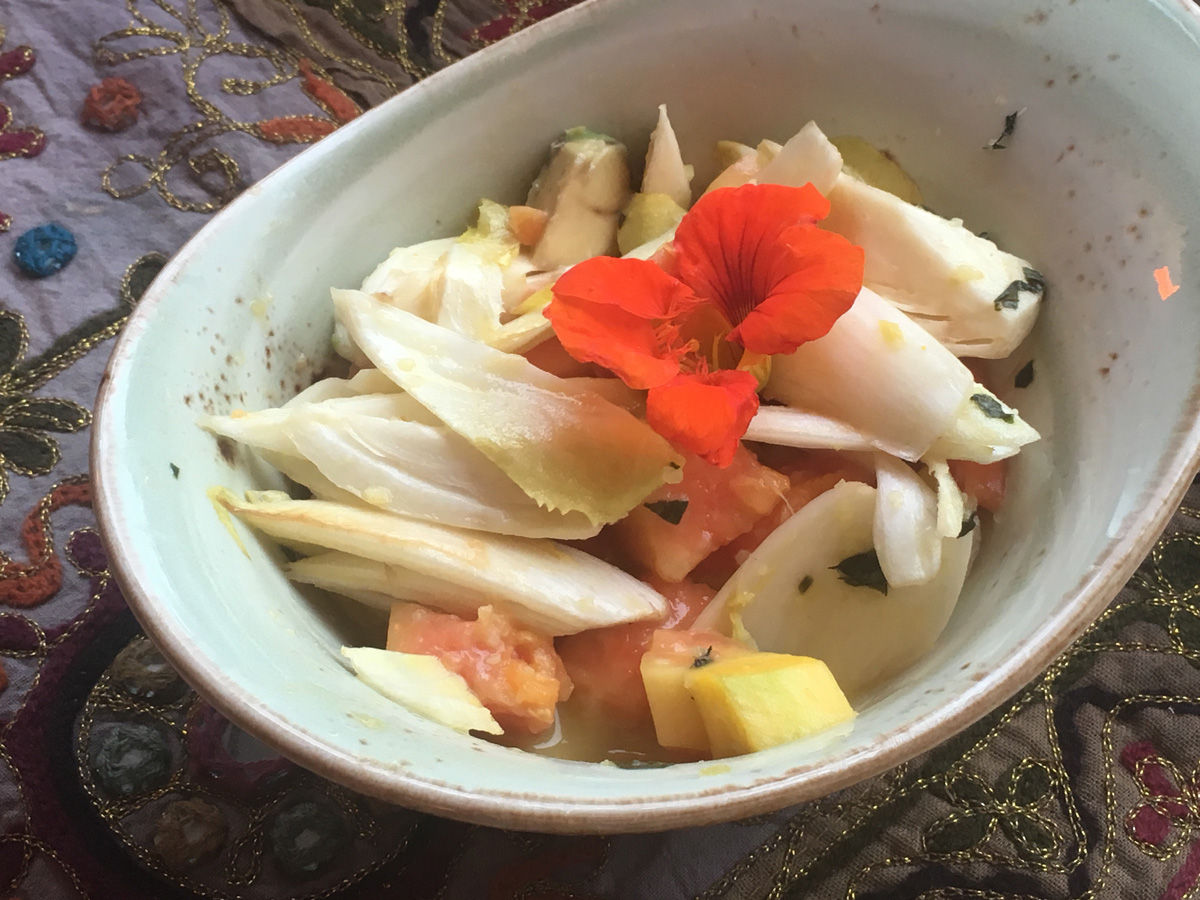
Farbenfroher ayurvedischer Salat mit Chicorée, Mango und essbaren Kapuzinerkresse-Blüten – kreative Küche aus dem Rosenberg Ayurveda Gesundheits- und Kurzentrum, die alle sechs Geschmacksrichtungen des Ayurveda vereint.
Recipe variations for every constitution type
Ayurvedic cuisine is known for its combination of pleasure and healing power. A balanced Ayurvedic recipe should not only taste good, but also have a therapeutic, balancing effect on the doshas (constitution) and agni (digestive power). This can be achieved through the targeted use of spices and foods.
In summer, a delicious chicory salad with melon and fresh mint is an ideal raw vegetable side dish for lunch, which soothes summer Pitta and strengthens Agni. The basic recipe consists of bitter chicory, sweet and cool melon, fresh mint and a little olive oil, lemon juice, pepper and rock salt. All six flavors are available and have been adapted to the seasonal Pitta dominance.
For type-specific "optimization", the recipe can be varied to meet the needs of the different Dosha types by selecting and exchanging the ingredients according to the rules of Ayurveda dietetics. This is because each food has special healing properties that we absorb through our daily consumption.
- Mango is even more suitablefor balancing Vata than melon in combination with chicory. The sweet and heavy mango is characterized by its nourishing, restorative and immune-boosting qualities. In combination with a little ginger and raisins, it is the perfect blend with the crunchy leafy vegetables.
- Papaya is the perfect partner for chicoryto balance Kapha. Due to its heating (ushna) quality, papaya is a good anti-Kapha fruit with a stimulating, catabolic and weight-reducing effect. Together with bitter chicory, a little black pepper and barberries, the salad is an ideal fat burner with an enjoyable addictive factor.
- The basic recipe for chicory and melon salad is perfectfor balancing pitta . If you want to increase the Pitta-reducing effect even more, you can add some grated coconut and fennel seeds, both of which are characterized by sweet, cooling and deacidifying qualities.