

Slim and smart with long pepper
Slim and smart with long pepper
This article appeared in Yoga Aktuell, April/May 2017 issue
In the competition for the "super spice" of Ayurveda, Pippali, the long pepper, is right up there with turmeric and ginger, beating everyone when it comes to versatility. Pippali is one of the best immune boosters, makes you slim, smart and balances all doshas.
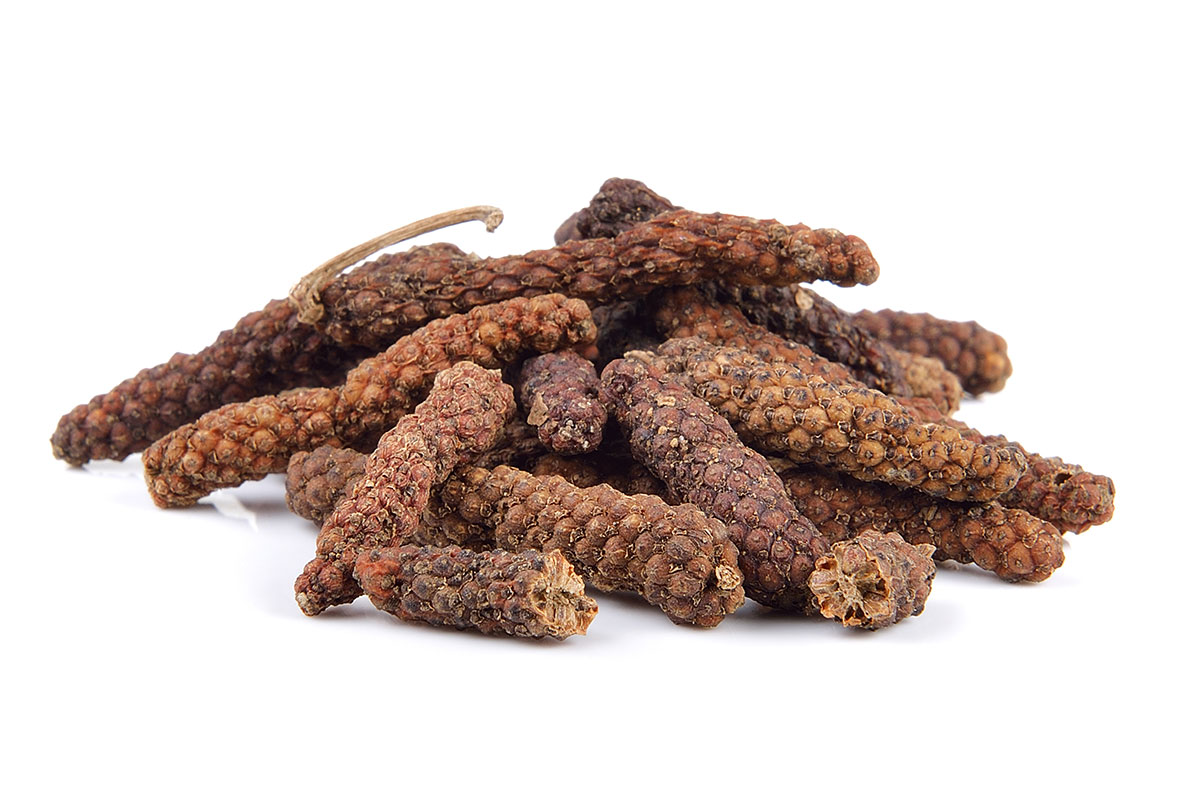
The long pepper (Piper longum) plays a special role among all types of pepper. The elongated pepper cobs, known as pippali in Ayurveda, are visually quite different from the black peppercorns: the 4-5 cm long sticks do not fit into any pepper mill and look rather brown-greenish when ground. Their taste is typically "peppery", i.e. hot and spicy. However, the effect after digestion (vipaka) is sweet. This is not only noticeable in the mild aftertaste, but also in the balancing effect on all three doshas. Pippali is a good metabolic regulator even for Pitta types, who otherwise cannot tolerate hot spices, and for Vata and Kapha types it is one of the best detox spices to stimulate digestion and eliminate metabolic waste products.
Pippali is also recommended in traditional Ayurvedic medicine as a versatile tonic for body and mind: It improves the autoimmune system and helps with hay fever and rheumatism, burns fatty tissue and sharpens intelligence with the ability to think and comprehend. From this perspective, it is therefore always worth adding a little Pippali to your daily diet in order to become slimmer, smarter and healthier. For those who want to use Pippali specifically as a therapeutic agent against specific ailments, Ayurvedic dietetics provides centuries-old tried and tested healing recipes in which the combination of ingredients, the way in which it is prepared and the time of consumption also play a major role in achieving the full effect.
Pippali in spring against hay fever and allergies
From an Ayurvedic point of view, spring is the ideal time for a Pippali cure to boost the natural cleansing process and strengthen the immune system. In March and April, our digestive fire is in an exceptional state: as the sun becomes more intense, the digestive system is also stimulated to burn off and release the waste products accumulated during the winter. If this natural detoxification process does not take place to a sufficient extent, the immune system is put under strain and metabolic autoimmune diseases such as hay fever and allergies are promoted. Pippali water is a tried and tested Ayurvedic recipe to remedy this. The pepper tea relieves all digestive organs, stimulates circulation and elimination and is not only a classic home remedy for hay fever, but also helps with rheumatism, depression and obesity.
The simple recipe is prepared in a similar way to the well-known ginger water by boiling 2-3 Pippali sticks in 2 cups of water for 5 minutes and then sweetening with a little honey.
Lose weight with Pippali honey
Pippali is also a proven therapeutic agent in Ayurvedic dietetics for weight loss. The long pepper has an intensely stimulating effect on fat metabolism, which is particularly effective when combined with honey. Just taking ½ teaspoon of ground Pippali mixed with honey in the morning boosts the sluggish fat metabolism in the catabolic metabolism. At the same time, pippali in combination with turmeric also stabilizes the appetite and thus protects against uncontrollable cravings. To achieve this function - which is also very important for diabetics - it is recommended to take a spice mixture of three parts turmeric and one part pippali during lunch. The Pippali turmeric mixture also goes very well in a chutney, which is a tasty and therapeutic improvement to an anti-Kapha meal.
Pippali for ADHD and dyslexia
According to Ayurvedic medicine, Pippali has a very special effect on the functions of the mind. As a so-called Medhya-Rasayana, it is used to promote intelligence and increase memory and receptivity. Regardless of whether we suffer from stress and can no longer concentrate properly as a result or lose memory power in old age - a quarter teaspoon of Pippali mixed with ghi in the morning works like a fitness program for the brain.
Pippali is also a highly recommended tonic for children's mental abilities: Ayurvedic pediatricians have excellent experiences with giving Pippali to children with behavioral problems, reading and spelling difficulties. They say that Pippali increases the connection between the right and left hemispheres of the brain, which has a positive effect on the child's development and learning process. The optimal recipe for supporting children's brain activity with Pippali is to administer it with milk. There is a traditional healing recipe called "Pippali milk", the preparation and use of which is described in detail in the ancient Ayurvedic scriptures. Taken in the morning, Pippali milk is said to promote the receptivity of the mind, while in the evening it promotes mental regeneration and sleep.
Pippali water for detoxification and strengthening the immune system
pour 500 ml of hot water over 3 Pippali sticks or ½ teaspoon of Pippali powder and simmer for 5 minutes. Allow to cool slightly, add 1 teaspoon of forest honey and drink in small sips throughout the morning
Traditional Pippali milk
Ingredients:
- 250 ml water
- 250 ml organic whole milk
- 10 g Pippali powder
- Candy sugar
Preparation: Combine the ingredients and cook over a medium heat until all the water has evaporated and the liquid has reduced to 250 ml. Then pour the decoction through a fine hair sieve and sweeten the milk with rock sugar to taste. Drink warm.
Eggplant chutney with pippali and turmeric
Oven-braised eggplants are a good vegetable for treating obesity and diabetes thanks to their light, spicy and heating qualities. These healing qualities are enhanced by the addition of turmeric and pippali.
Ingredients:
- 1 eggplant
- 1 red onion
- 1 slice of fresh ginger
- 1 beef tomato
- 2 tsp sesame oil
- ½ tsp black mustard seeds
- 1 tsp turmeric
- 1/3 tsp pippali
- ¼ tsp tamarind paste
- ¼ tsp rock salt
Preparation: Cut the eggplant in half and place on a baking tray. Bake at 195 degrees for 25 minutes. Then scrape the soft eggplant flesh out of the skin with a spoon. Finely chop the onion and ginger and dice the tomato. Heat the sesame oil in a pan. Add the mustard seeds and crack open. Add the onions and ginger and brown. Add the eggplant flesh to the spice stock and sauté. Add the tomatoes, tamarind and rock salt and bring to the boil for 2 minutes. Stir in the turmeric and pippali. Add more salt to taste if necessary. Place in a sealable jar and consume within 3-4 days. The chutney can be eaten hot or cold.
This article is intended for general information only and does not replace medical advice, diagnosis or treatment. Since the effect of Ayurvedic herbs and dietary supplements depends individually on one’s constitution and life situation, we recommend obtaining a therapeutic diagnosis and prescription from a qualified Ayurveda practitioner before use – particularly regarding dosage, timing and duration of intake. Any application is at your own responsibility.